Rare Cards UK · Collector Guide
Pokémon Card Grading Guide: 7 Expert Tips for Collectors
This Pokémon Card Grading Guide explains how professional grading works, what grades can tell you about a card, how to check certification details and what to consider before choosing graded Pokémon cards for your collection.
1. What Is Pokémon Card Grading?
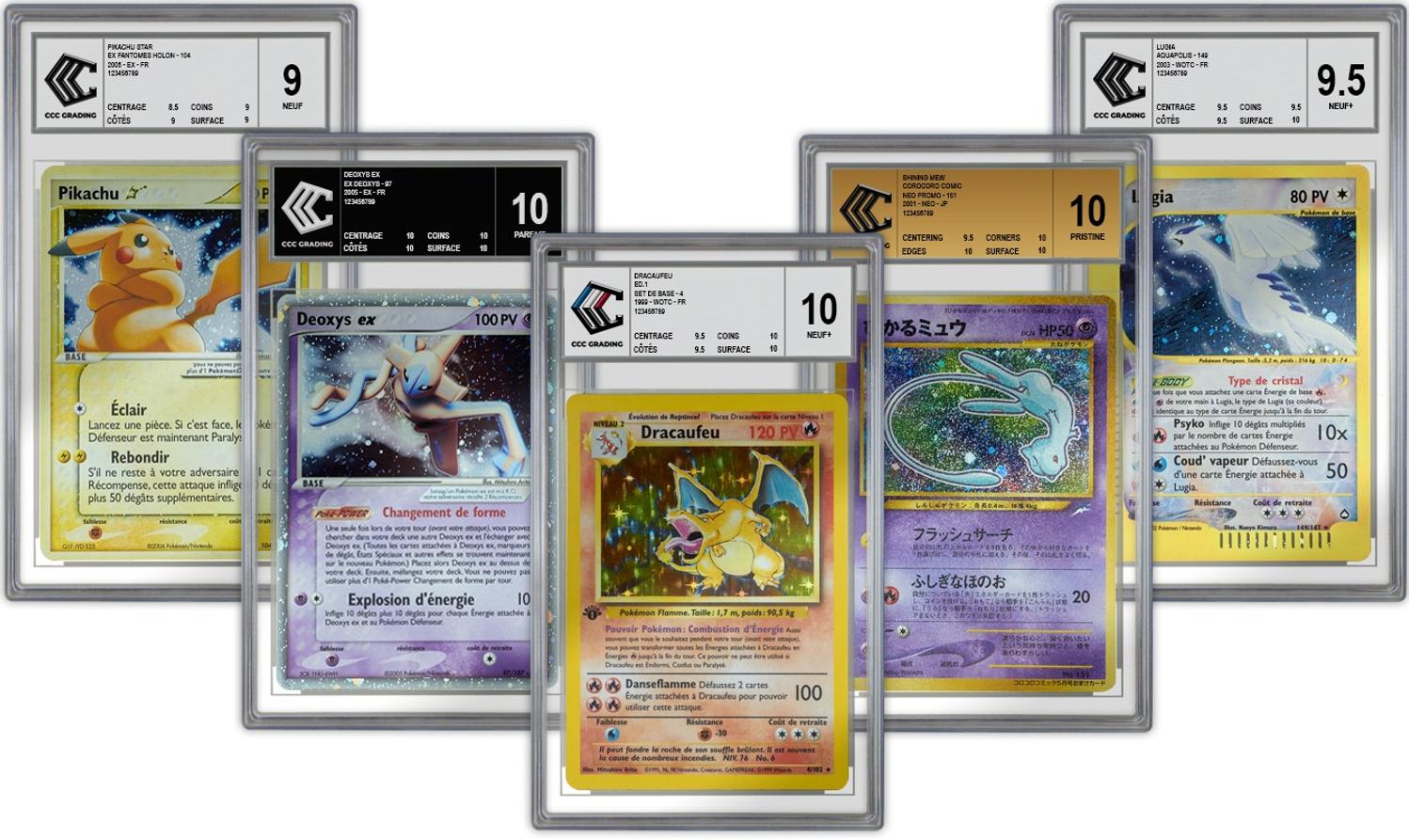
A Pokémon Card Grading Guide starts with the basics. Professional trading card grading is a process in which a specialist grading company examines a card and assigns a grade according to its own standards. Cards that are accepted for grading are commonly sealed in protective holders, often called slabs, with a label identifying the card and its assigned grade.
Collectors may choose graded cards because the holder protects the card during ordinary handling, the grade provides a consistent reference for condition, and the certification information can help identify the item. Graded examples are available across different Pokémon eras, languages, sets and card types, although the precise selection varies.
A grade is not the same as a guarantee of a card’s future price. Collecting preferences, supply, demand, set popularity and the particular card all influence how collectors assess an item. Choose cards you enjoy collecting and review the individual product information before placing an order.
2. Understanding PSA, BGS and CGC
Several established companies grade trading cards. Their grading approaches, labels, holders and reporting systems can differ, so it is important to understand which company’s grade appears on a particular card.
PSA
Professional Sports Authenticator, commonly called PSA, grades trading cards and provides a certification lookup tool. You can use its official database to compare the recorded card details with the label on a PSA-graded card.
BGS
Beckett Grading Services, or BGS, is another grading service found in the trading card collecting market. Check the label, grade and available certification information for the individual card rather than assuming its standards are identical to another company’s.
CGC Cards
CGC Cards grades trading cards and offers an official certification lookup service. The lookup can help you compare the information recorded for a certified card with the card and holder you are viewing.
Compare like with like
A grade from one company should not automatically be treated as identical to the same number or label from another company. Review each grading company’s standards and the card’s own details when comparing items.
You can visit the official resources directly: PSA Certification Verification, Beckett Grading and CGC Certification Verification.
3. What Do Pokémon Card Grades Mean?
Grading companies use their own grading scales, terminology and criteria. Higher numerical grades generally indicate that a card meets more demanding condition standards under that company’s system. However, the number alone does not tell you everything about a card’s identity, history or appeal.
Understand the exact grade
Read the complete label rather than relying on the number alone. Check the grading company, card name, card number, set information and any additional designation printed on the label. Make sure those details match the product description and images.
Look beyond the number
Two cards with similar grades can still differ in artwork, rarity, language, edition, set, print characteristics and collector demand. A vintage holo and a modern full-art card, for example, appeal to different collecting interests even if their assigned grades are similar.
4. What Do Graders Examine?
Professional graders assess physical characteristics according to the standards of their grading company. Common condition considerations include the following:
Centreing
Centreing refers to how the printed design sits within the card’s borders. Noticeable differences between the border widths can affect how a card is assessed under a grading company’s standards.
Corners
Corners are checked for condition issues such as wear, whitening, rounding or damage. The condition of all four corners can be relevant, and a card may have different levels of wear from one corner to another.
Edges
Edges can show whitening, chipping, roughness or other signs of handling. These details may be subtle, especially on cards with dark borders, and their significance depends on the grading criteria being applied.
Surface
Surface assessment may involve looking for scratches, dents, print lines, stains, creases, indentations and other imperfections. Foil cards can show surface marks differently depending on their finish and how light reflects from the artwork.
A card can look attractive in a photograph and still have condition details that are difficult to see without close inspection. This is one reason a grading label and clear product information are useful references, while neither replaces checking the particular item you intend to purchase.
5. How to Check a Graded Pokémon Card
Certification checks are an important part of researching graded collectibles. A certification lookup may show details associated with a grading company’s record, allowing you to compare that record with the card you are considering.
Step 1: Read the label
Identify the grading company, certification number, card name, card number and grade. Copy the certification number carefully.
Step 2: Use the official lookup
Enter the number on the relevant grading company’s official verification website. Avoid relying solely on screenshots or a seller’s description.
Step 3: Compare the details
Check whether the recorded card identity and grade match the label and item being offered. Review any available images and other identifying details.
Step 4: Consider the whole item
Review the holder, label, product photographs and seller information together. A matching certification record on its own should not be treated as absolute proof that a physical holder or item is genuine.
For PSA-graded cards, use the official PSA certification lookup. For CGC-graded cards, use the official CGC Cards lookup. For BGS items, consult Beckett’s official website for its available grading and certification resources.
6. What to Check Before Buying Graded Pokémon Cards
When browsing graded Pokémon cards, take time to read each listing carefully. A clear listing helps you understand what is being sold and whether it fits your collection.
- Card identity: Confirm the name, card number, set, language and any edition or special designation shown.
- Grading details: Note the grading company, assigned grade and certification information where available.
- Photographs: Review the images carefully. Look for the label, holder and visible condition details.
- Product description: Read the full listing, including any notes about variants, special finishes or other relevant details.
- Availability: Check whether the specific item is in stock before ordering. Collectible listings can change.
- Delivery and returns: Read the store’s delivery and returns information so you understand the applicable terms before purchase.
Rare Cards UK offers a catalogue of Pokémon cards and other trading card collectibles, including graded items when available. Start with the full Rare Cards UK shop or browse the rare Pokémon cards collection to review the current listings and their individual product details.
7. Graded Pokémon Cards Versus Ungraded Cards
Graded and ungraded cards serve different collecting preferences. Neither format is automatically the best choice for every collector. The right option depends on what you enjoy, your budget, the card itself and how you intend to store or display it.
Why some collectors choose graded cards
A graded card arrives in a protective holder and has a grade recorded by the grading company. This can be useful to collectors who value an assigned condition grade, certification details or a consistent presentation for display.
Why some collectors choose ungraded cards
Ungraded cards, sometimes called raw cards, can suit collectors who prefer binder collections, want to handle their cards more directly or are looking for particular artwork and sets without a grading label. Their condition must be judged from the listing and available images, and descriptions can vary between sellers.
Choose according to your collection
Consider which characters, illustrations, eras and sets matter most to you. Compare the actual product descriptions, condition details and prices, rather than choosing solely because one card has a higher grade or a more impressive-looking holder.
How to Care for Graded Pokémon Cards
Although graded cards are sealed in protective holders, it is still sensible to handle them with care. Hold the holder by its edges, keep it away from food and liquids, and avoid placing heavy objects on top of your collection.
Store graded cards in a stable, dry place away from excessive heat, direct sunlight and sudden environmental changes. Avoid dropping or bending holders, and use suitable storage designed for slabs when arranging larger collections.
For ungraded cards, suitable sleeves, rigid holders or properly sized binder pages can help reduce everyday handling and storage wear. Choose materials intended for collectible cards, and avoid forcing a card into a sleeve or holder that is too small.
Frequently Asked Questions About Pokémon Card Grading
Are higher-graded Pokémon cards always more valuable?
No. A grade is one factor collectors may consider, but value also depends on the exact card, set, language, rarity, condition, collector demand and other market factors. A higher grade does not guarantee a higher future price.
Can I verify a PSA certification number online?
Yes. PSA provides an official online certification lookup. Compare the returned details with the item you are examining, remembering that a matching database record alone cannot eliminate every risk of a counterfeit label or holder.
Does the same numerical grade mean the same thing at every company?
No. Grading companies use their own standards, terminology and processes. Review the particular company’s grading information instead of assuming different grading systems are interchangeable.
Should I buy graded or ungraded Pokémon cards?
The choice depends on your collecting preferences. Graded cards provide a professional grade and protective holder, while ungraded cards may better suit collectors who prefer binder collections or a different collecting experience. Check each product’s details.
Where can I find graded Pokémon cards in the UK?
You can begin by exploring the Rare Cards UK rare Pokémon cards collection and checking the current listings. Availability changes, so review each product page for its description, grading details and stock status.
How can I ask Rare Cards UK about a listing?
Visit the Rare Cards UK contact page if you need help understanding the information shown on a product listing. Include the card’s name or product link so your question can be addressed more clearly.
Explore Pokémon Cards at Rare Cards UK
Understanding grading helps you make more informed collecting decisions, whether you are searching for a professionally graded card or expanding a binder with ungraded favourites. Check the product details, compare the exact cards and choose items that suit your own interests.
Rare Cards UK features Pokémon trading cards and other collectible card products, with stock and availability varying by listing. Browse the shop, review the relevant delivery and returns information, or contact the team if you have a question before ordering.
This guide is for general collecting information. Grading standards and verification procedures may change, so consult the relevant grading company’s official resources for the latest information.